
LitUp - Find Your Next Date
CloudMind AI LLCSocial
4.43.29K Reviews
- Version
- 1.1.2
- Installs
- 500.00K
- Age Rating
- Mature 17+
Screenshots
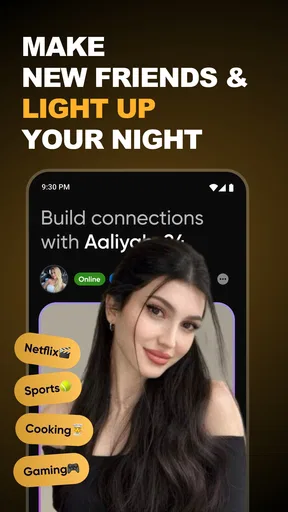
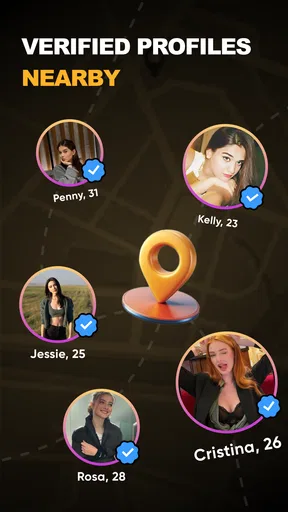
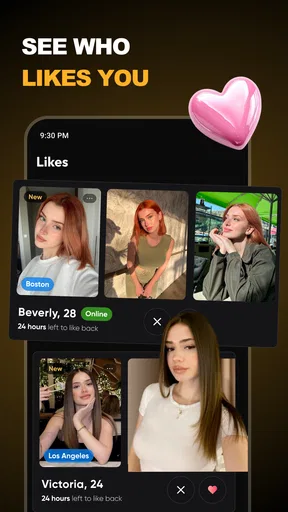
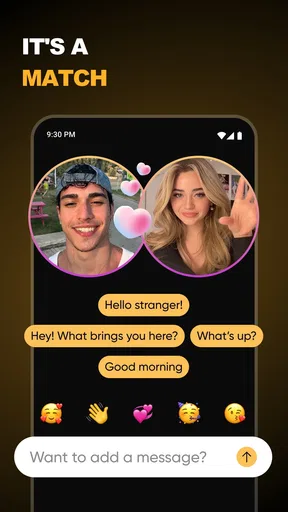

Our Review of LitUp - Find Your Next Date
 Analysis by Appyee
Dating apps often promise to make meeting people feel simple, but the real test is whether the experience helps you move from browsing to a comfortable, worthwhile conversation. I spent time with LitUp - Find Your Next Date to see where it fits among social and dating apps, and my impression is that it works best for people who want a direct way to discover potential dates nearby without treating every interaction like a rushed decision.
LitUp is a free social app from CloudMind AI LLC, aimed at mature users who are ready to chat, meet, and explore romantic connections. It has built a noticeable audience, with over 500 thousand installs, a 4.4 average from around 29 thousand ratings, and roughly 3 thousand reviews. Those figures suggest that the app has moved beyond being an obscure experiment, although popularity alone does not guarantee that every local area will feel equally active.
My overall view is positive but measured. The app is easy to understand, and its nearby-dating focus gives it a practical purpose. At the same time, anyone expecting a fully established alternative to the biggest dating platforms should approach it with realistic expectations. The quality of the experience depends heavily on who is active around you, how carefully you use the conversation tools, and whether you are comfortable with a dating service built around meeting people you may not already know.
How LitUp feels in everyday use
The first thing I noticed is that LitUp keeps its central idea clear. Rather than presenting itself as a general-purpose social network, it is built around the possibility of finding a date nearby. That focus matters because it changes how I evaluate profiles and conversations. I am not opening it to follow creators, fill spare time with endless posts, or manage a large online identity. I am opening it with a specific question: is there someone here I would genuinely enjoy talking to and possibly meeting?
That makes the app a natural fit for someone who has recently moved, spends time in a new neighborhood, or simply wants to widen their dating circle beyond friends and work contacts. It can also suit a person who prefers a local starting point. A nearby connection may be easier to turn into a real coffee, walk, or casual activity than a match who lives far away, although proximity should never be treated as proof of compatibility.
In a realistic evening scenario, I might open LitUp after work, look through the available dating possibilities, and focus on a small number of people whose profiles give me something specific to ask about. Instead of sending the same empty greeting to everyone, I would use the local angle as a conversation starter: a favorite part of town, a weekend routine, or an activity that makes sense in the area. This approach makes the app feel more useful than simply collecting matches, because it turns location into a reason to begin a conversation rather than the entire basis for choosing someone.
The nearby concept also creates a trade-off. A local pool can feel relevant, but it may be narrower than a broad national or international service. If I lived in a densely populated area, I would expect more variety than someone in a small town. That is not a flaw unique to LitUp; it is an unavoidable part of location-led dating. Still, it is important to understand before deciding whether the app can replace another service or should be used alongside one.
Who will get the most from the app
I would recommend LitUp first to adults who want a straightforward dating environment and are willing to take responsibility for the quality of their interactions. It suits people who prefer making their own judgments from short conversations instead of relying entirely on elaborate compatibility systems. It is also useful for someone who wants a second dating app with a more local emphasis, particularly if their current service feels repetitive or overly crowded.
The mature audience matters here. LitUp carries a Mature 17+ content rating, so I would not treat it as an app for teenagers or casual family use. That rating is a reminder to approach conversations with adult judgment, especially when chats move quickly toward personal subjects, private contact details, or plans to meet. I would keep early conversations inside the app, avoid sharing my home address, and arrange any first meeting in a public place during a busy time.
I would skip LitUp if I wanted a carefully guided matchmaking process, a strong emphasis on long personality questionnaires, or a dating experience that removes most of the uncertainty for me. I would also hesitate if I were uncomfortable with location-based discovery. The app’s appeal comes from making nearby dating more accessible, so someone who wants maximum distance from local discovery may prefer a different kind of social service.
What the current version says about its direction
The current version is 1.1.2, while the app was released on December 5, 2024. That places LitUp in a relatively early stage compared with long-established dating brands. I see that as both an opportunity and a limitation. A newer product can feel less weighed down by years of complicated menus and habits, but it may also still be refining how it handles the many small details that make dating apps comfortable over time.
For existing users, the most meaningful sign is not simply the version number itself but the fact that the product is still in an active phase of development. I would expect the experience to evolve as CloudMind AI LLC learns which parts of nearby dating people actually use and which parts create friction. However, I would not assume that a future improvement is already available. The sensible approach is to judge the present release on what it does today and treat future changes as possibilities rather than promises.
That distinction is especially useful when deciding whether to pay for anything. LitUp is free to download and use, but it includes in-app purchases ranging from about four dollars to one hundred dollars per item. The wide range means I would read each purchase screen carefully instead of assuming that every paid option has the same value. I would begin with the free experience, identify a specific problem I want to solve, and only then consider whether a paid feature is worth the cost.
For a new user, this also means there is little reason to rush. I would spend enough time learning the rhythm of nearby activity, seeing whether conversations develop naturally, and deciding whether the app adds something that my usual dating service does not. A purchase should support a clear goal, not become a reflex after a quiet day or an unsuccessful conversation.
Small habits that make the experience better
My first practical tip is to replace volume with selectivity. On a nearby dating app, it can be tempting to contact many people simply because they are close. I found that a more useful workflow is to choose a few profiles, note one genuine detail from each, and start conversations that could not have been sent to everyone else. This takes slightly more effort but makes it easier to recognize whether the other person is engaged, curious, and respectful.
My second tip is to separate local convenience from trust. Someone being nearby makes a meeting easier to arrange, but it does not tell me whether the person is honest or safe. I would avoid revealing an exact routine, workplace location, or home area during the first exchange. If a conversation becomes pressuring, sexual before I am comfortable, or unusually focused on money and private information, I would end it rather than trying to rescue the interaction.
A third useful habit is to use the chat stage as a short screening period rather than an endless substitute for real communication. I would look for consistency in what someone says, willingness to answer ordinary questions, and respect for boundaries. If the conversation feels promising, a short public meeting is more informative than weeks of increasingly personal messages. If it feels confusing or one-sided, the nearby setting does not make it worth forcing.
I would also keep expectations flexible about response times. A local app can show people who are geographically relevant but not currently available to chat. A slow reply is not automatically rejection, just as a fast reply is not automatically a sign of serious interest. The best use of LitUp is as a way to open doors, not as a system that can guarantee an outcome.
How it compares with familiar alternatives
Compared with a large mainstream dating app, LitUp’s clearest distinction is its nearby orientation. Bigger alternatives may offer a broader user base, more mature discovery tools, or a longer history of refinements. They may be better for someone who wants the largest possible pool or who travels often and wants to browse across many locations. LitUp is more appealing when the immediate question is, “Who could I realistically meet in my area?”
Compared with general social networks, LitUp has a more direct romantic purpose. A general platform may be better for maintaining friendships, joining interest communities, or interacting with people through shared public content. LitUp makes more sense when I want the possibility of a date to be clear from the beginning. That clarity can reduce ambiguity, but it also means the app may feel less suitable for someone who wants relationships to develop indirectly through hobbies or group activities.
Compared with a matchmaking service that emphasizes detailed compatibility, LitUp appears more dependent on the user’s own judgment. That can feel refreshing because I am not waiting for a complex score to tell me whom to contact. It can also be demanding because I have to evaluate communication quality, intentions, and boundaries myself. For me, the strongest setup would be using LitUp for local discovery while relying on careful conversation rather than expecting the app to make the important decisions.
Where the experience still needs care
The biggest limitation is the uncertainty built into any newer, location-based dating platform. A large install count does not mean that every neighborhood has an equally strong community. Someone may find plenty of relevant activity in one city and very little in another. I would give the app a fair trial in my own area before deciding that it is either a success or a failure.
Another point of friction is the emotional pressure that can come from nearby dating. When a potential match lives close, it is easy to feel that a meeting should happen quickly. I think LitUp works better when I treat proximity as convenience, not urgency. A person should still be allowed to ask questions, take time, and decline without having to justify the decision.
The purchase structure is another reason to stay attentive. A free app with individual purchases can be useful, but the value depends on what each option actually changes in the experience. I would not buy anything because a prompt makes me feel that I am missing my only chance. I would compare the benefit with how often I use the app and whether the free version already supports the kind of conversations I want.
Privacy and personal safety also remain areas where user behavior matters greatly. I would use a separate profile photo from accounts that expose too much personal information, avoid sending intimate material to someone I have not met, and tell a friend where I am going if I arrange a date. These are not reasons to reject LitUp; they are sensible boundaries for any service that connects strangers who may live nearby.
What I would watch as LitUp develops
As CloudMind AI LLC continues developing the app, I would pay attention to whether the nearby experience becomes more useful without becoming overwhelming. The best progress would be improvements that help people understand who is genuinely available, communicate with less friction, and make sensible decisions about meeting. I would also look for signs that the app remains welcoming to people who want different dating speeds, rather than rewarding only the fastest or most persistent users.
I would watch how the product balances free access with in-app purchases as well. Since the price of individual purchases can range from a few dollars to around one hundred dollars, transparency will matter to me. Clear explanations and easy-to-understand choices would make paid options feel more trustworthy. Confusing prompts or pressure to spend would weaken the otherwise approachable nature of the app.
For current users, the practical advice is simple: keep the app updated, but evaluate changes by their effect on your actual routine. If a new version makes it easier to start meaningful conversations or manage local discovery, that is valuable. If it only encourages more browsing without improving the quality of interactions, I would not mistake activity for progress.
My recommendation after using it
LitUp - Find Your Next Date is worth trying if you want a free, local-first way to explore dating conversations and you are comfortable making careful decisions for yourself. I like its clear purpose, its approachable social focus, and the possibility of turning online discovery into a realistic nearby meeting. The current release feels like a product with room to mature rather than a finished replacement for every established dating service.
I would start without spending money, set a clear boundary around personal information, and judge the app by the quality of conversations rather than the number of profiles I can view. If the local user pool feels active and respectful, LitUp can become a useful addition to a dating routine. If I wanted the broadest audience, deeply developed matching tools, or a more established ecosystem, I would choose a larger alternative instead.
My final take: LitUp is most convincing as a focused local dating option, not as a promise of instant romance. Used patiently, it gives adults a practical place to meet potential dates nearby. Used impulsively, it can encourage rushed decisions and unnecessary spending. That balance is the key to getting value from it: let the app introduce possibilities, then let your own judgment decide what happens next.
Verdict
Strengths of LitUp - Find Your Next Date
- Simple interface makes browsing profiles quick and easy.
- Profile prompts can help users start more meaningful conversations.
- Useful filters make it easier to find compatible people.
- The app encourages discovering potential matches beyond your usual circle.
- In-app messaging keeps conversations organized in one place.
Limitations of LitUp - Find Your Next Date
- The quality of matches may vary depending on your location.
- Some features may require a paid subscription or in-app purchases.
- Limited user activity can make matching slower in smaller areas.
- New users may need time to build a complete, appealing profile.
- As with any dating app, fake or inactive profiles may occasionally appear.
Similar Picks in This Category
View All
Meta Platforms, Inc.4.6

Instagram4.0

Likee-Live, Chat & Party Games
Likeme Pte. Ltd.4.4

Facebook Lite
Meta Platforms, Inc.4.5

TikTok - Videos, Shop & LIVE
TikTok Pte. Ltd.4.0

Moj: Free Short Drama & Reels
ShareChat4.1
Frequently Asked Questions
What is LitUp - Find Your Next Date?
LitUp - Find Your Next Date is a dating app designed to help people discover potential romantic connections through user profiles, matching features, and in-app communication. After setting up a profile, you can browse other members, review shared interests and personal details, and decide whether you would like to connect. The experience is intended for adults looking for dates, new relationships, or meaningful conversations.
How does matching work on LitUp?
Matching generally depends on the preferences and information you provide when creating your profile. You can usually indicate details such as your location, interests, and the type of connection you want, allowing the app to present more relevant profiles. Before downloading, remember that match quality depends on the number of active users in your area and how complete and accurate your profile is.
Is LitUp free to download and use?
LitUp may be available to download at no initial cost, but some features can require in-app purchases or a paid subscription. Dating apps commonly place advanced discovery tools, increased visibility, unlimited interactions, or other premium options behind a payment plan. Check the current listing in the Google Play Store or Apple App Store for exact prices, trial conditions, renewal terms, and the features included with each subscription.
Is LitUp safe and private to use?
As with any dating platform, you should review LitUp’s privacy policy, permissions, and community guidelines before creating an account. Avoid sharing your home address, financial information, passwords, or other sensitive details with people you have just met. Use the app’s reporting and blocking tools when necessary, and arrange first meetings in public places while informing someone you trust about your plans.
What should I know before creating a LitUp profile?
You will likely need to provide basic personal information, photos, preferences, and possibly location access to receive nearby recommendations. Use recent, genuine photos and write a clear description so other users understand your interests and intentions. Also check the minimum age requirement and account rules before signing up, since the app may not be suitable for minors or for users seeking connections outside its supported regions.
